Changelog

Stay up to date with the latest features, improvements, and fixes in Pergola.

v1.5.0 July 6, 2026

Custom Domains, Plug-in Authentication, and faster Builds

New Features

Custom domains and plug-in authentication for your applications

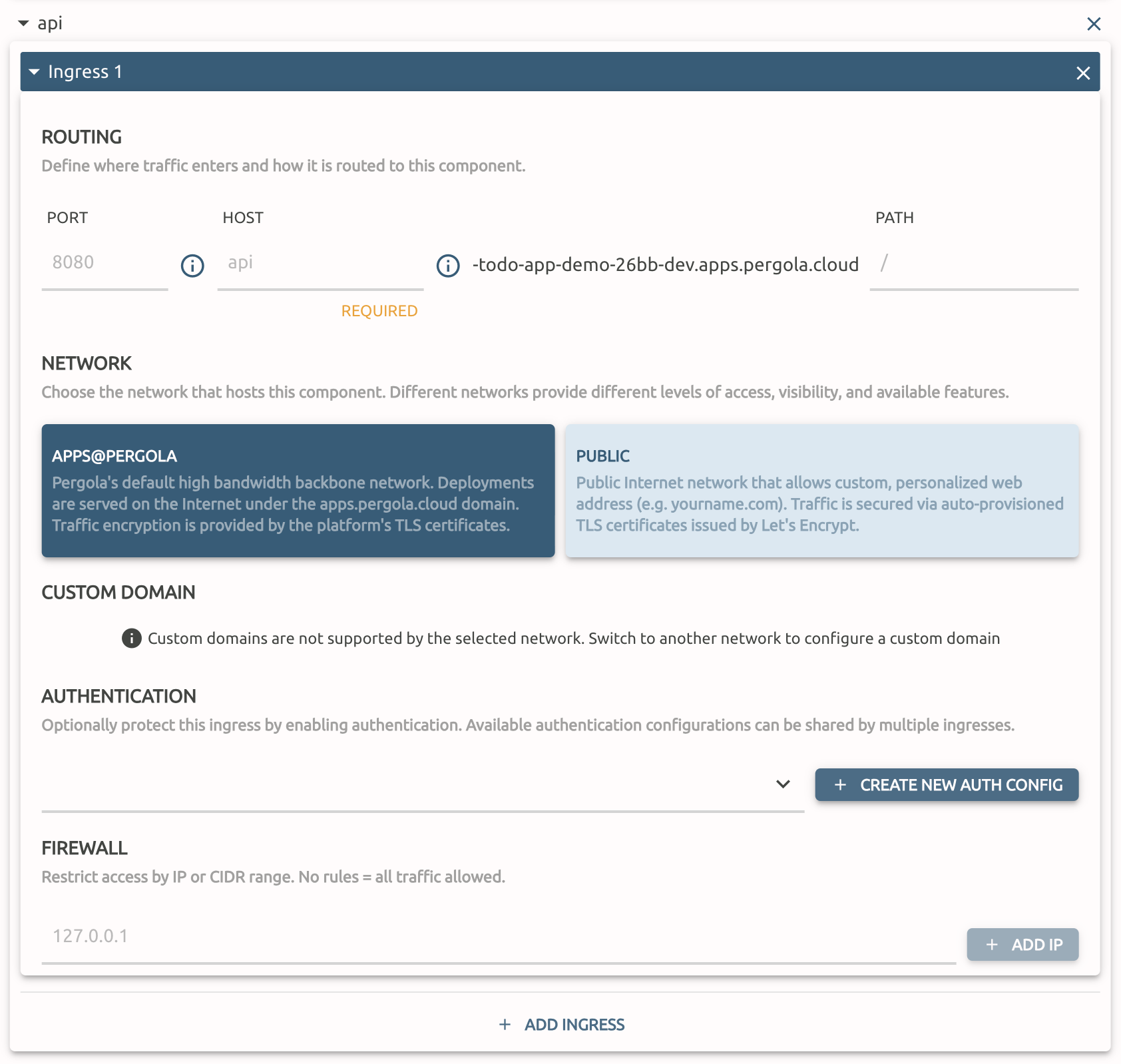
Fine grained settings to control who and how users access your applications. Configurable per stage, enables custom domains, authentication, firewall, and multiple entry points (ingresses) per component.

Define networking and tailored routing for your application: Networking and ingress rules per component
Plug-in authentication via your prefered OIDC/OAuth provider without touching the code:
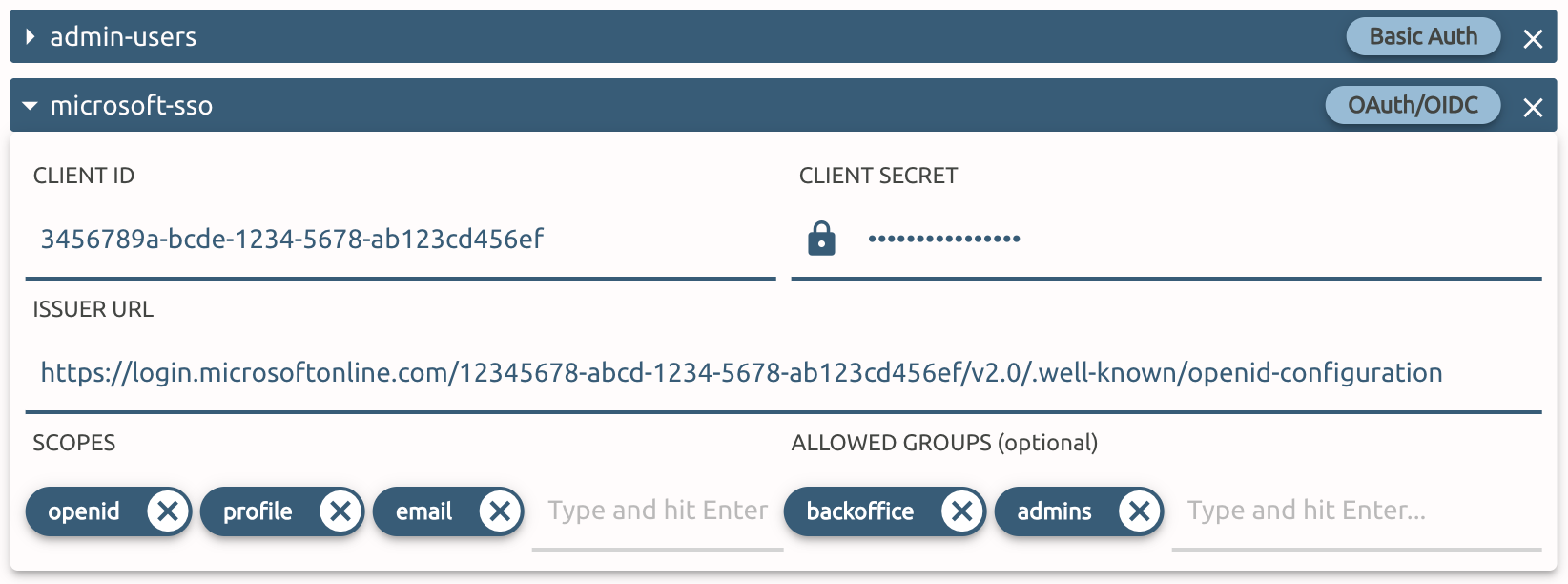
Enable authentication per component and ingress with your OIDC provider

Custom domains, multiple ingress rules, and much more: Custom domain, multiple ingresses
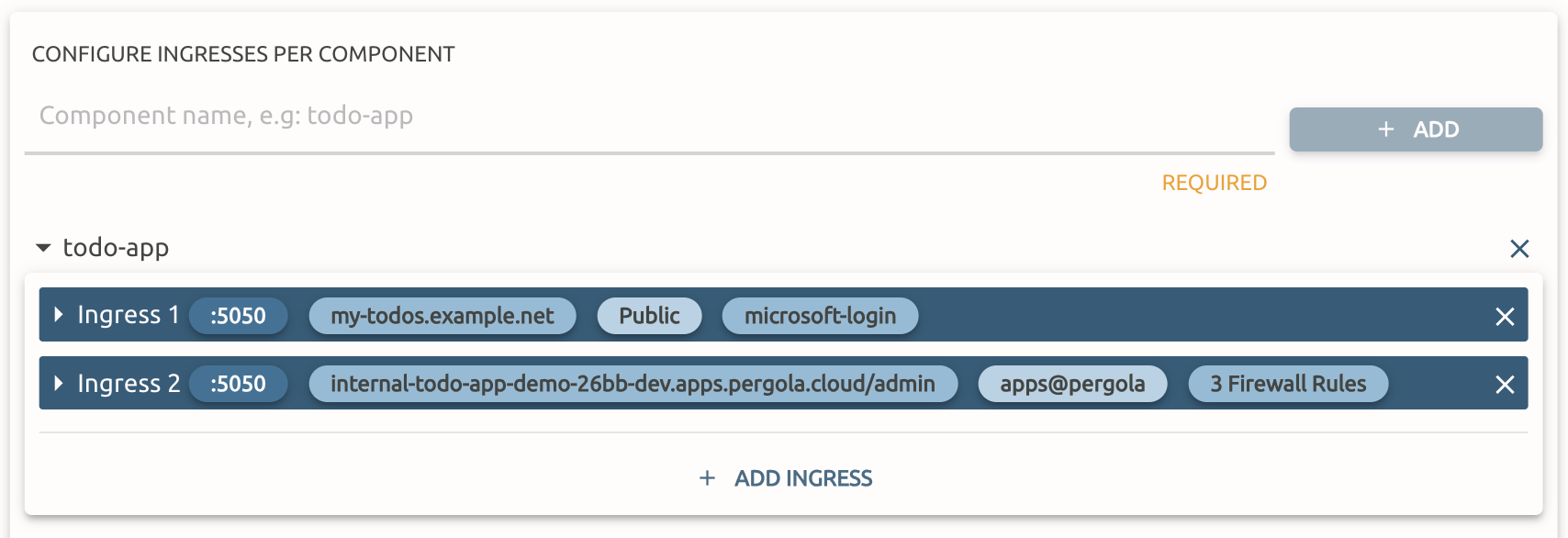
See Ingresses Documentation for details.

Timezone support for scheduled jobs

For scheduled jobs you can now specify a time zone. Especially useful when running jobs that depend on dailight saving time (DST) or other local time regulations.

components:
- name: "runs-daily-at-2am-german-time"
  scheduled: "0 2 * * *"
  scheduled-timezone: "Europe/Berlin"

See Scheduling for details.

Release Webhook

First released as a preview feature in v1.4.3, is now GA.

The Release Webhook notifies an external service before and after each deployment. The before deployment message can be approved or rejected by the external service, enabling custom rules and quality gates before each release. The after deployment message is a notification only, e.g. for external auditing, or triggering additional workflows.

Please talk to your Pergola administrator for integration options.

GitLab Webhook events

Native support for Webhook events from GitLab, i.e. push events.

Improvements

  • Optimised build pipeline and more efficient caching reduce build time by up to 80%, particularly for frequently repeated builds
  • Container builds now use BuildKit which is the builder backend also used by Docker, thus similar to what most developers use locally, ensuring a more consistent developer experience

Bug Fixes

  • Jobs were getting retried even if max retries was set to 0
  • A race condition on ECR backed platforms was occasionally causing build failures
  • Build image cache was getting invalidated when running a build for multiple platforms in parallel

Kubernetes Support

  • AKS, EKS and GKE v1.34+ supported
v1.4.7 March 4, 2026

Improvements

  • Improved the build process by eliminating redundant image creation.

    Previously, when multiple components referenced the same Dockerfile with identical parameters, they were built independently.

Bug Fixes

  • Fixed builds failing when branch names were too long or contained special characters
v1.4.6 December 22, 2025

Bug Fixes

  • Fixed Outpost failing to start on Kubernetes >= v1.33

Kubernetes Support

  • AKS, EKS and GKE v1.33+ supported
v1.4.5 November 5, 2025

Improvements

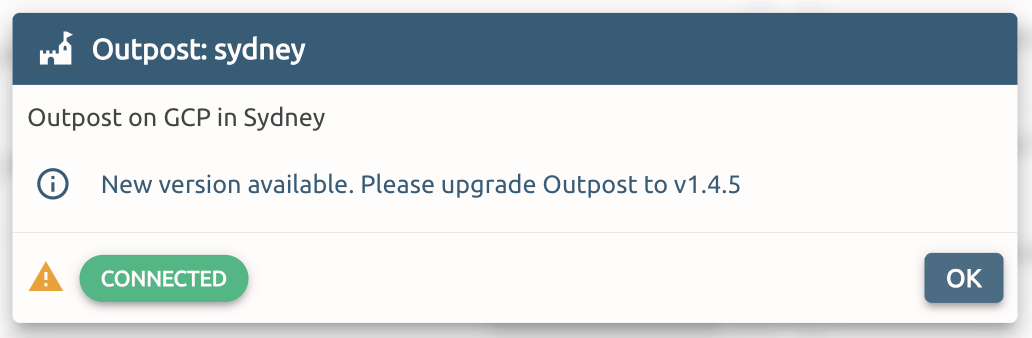
  • Outposts now report their local version to the cluster

    An Outpost reporting its version, with an upgrade hint

  • Minor fixes and improvements, dependency upgrades

v1.4.4 September 16, 2025

Improvements

  • Vulnerability scans can now be retried (configurable in the backend), mitigating potential rate-limit issues on container registries
  • Platform admins can review all vulnerability scans across all projects
  • Minor fixes and improvements, upgraded dependencies

Kubernetes Support

  • AKS, EKS and GKE v1.32+ supported
v1.4.3 May 2, 2025

New Features

Webhook implementations can pre-review and eventually approve or reject releases, enabling custom rules and checks before each release.

⚠️ This is a pre-release (beta) feature.

Improvements

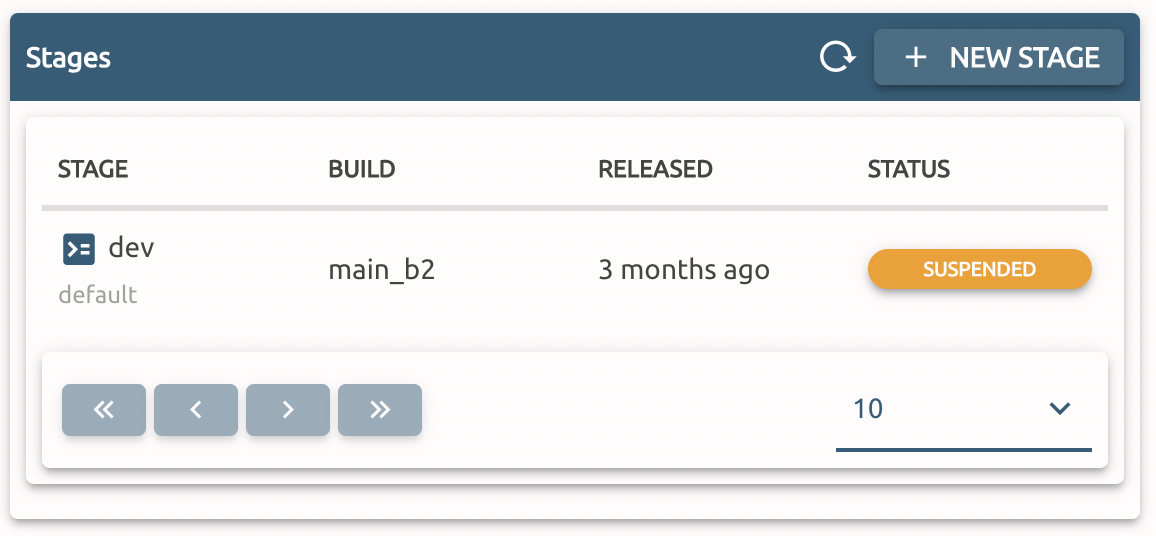
  • Platform admins can now suspend and resume any stage
  • Minor fixes and improvements, dependency upgrades
v1.4.2 March 12, 2025

Improvements

  • Ingress performance optimisations
  • Minor fixes and improvements, dependency upgrades
v1.4.1 February 27, 2025

Improvements

  • Support for GitHub Enterprise URLs

Bug Fixes

  • Fixed wrong node pool assignment during builds, which caused incorrect scheduling of build-related workloads
v1.4.0 February 25, 2025

Automated CI/CD, Backups & Cost Tracking

This release brings end-to-end automation, full-stage backups, and real-time visibility into what your projects cost.

New Features

Cost Tracking

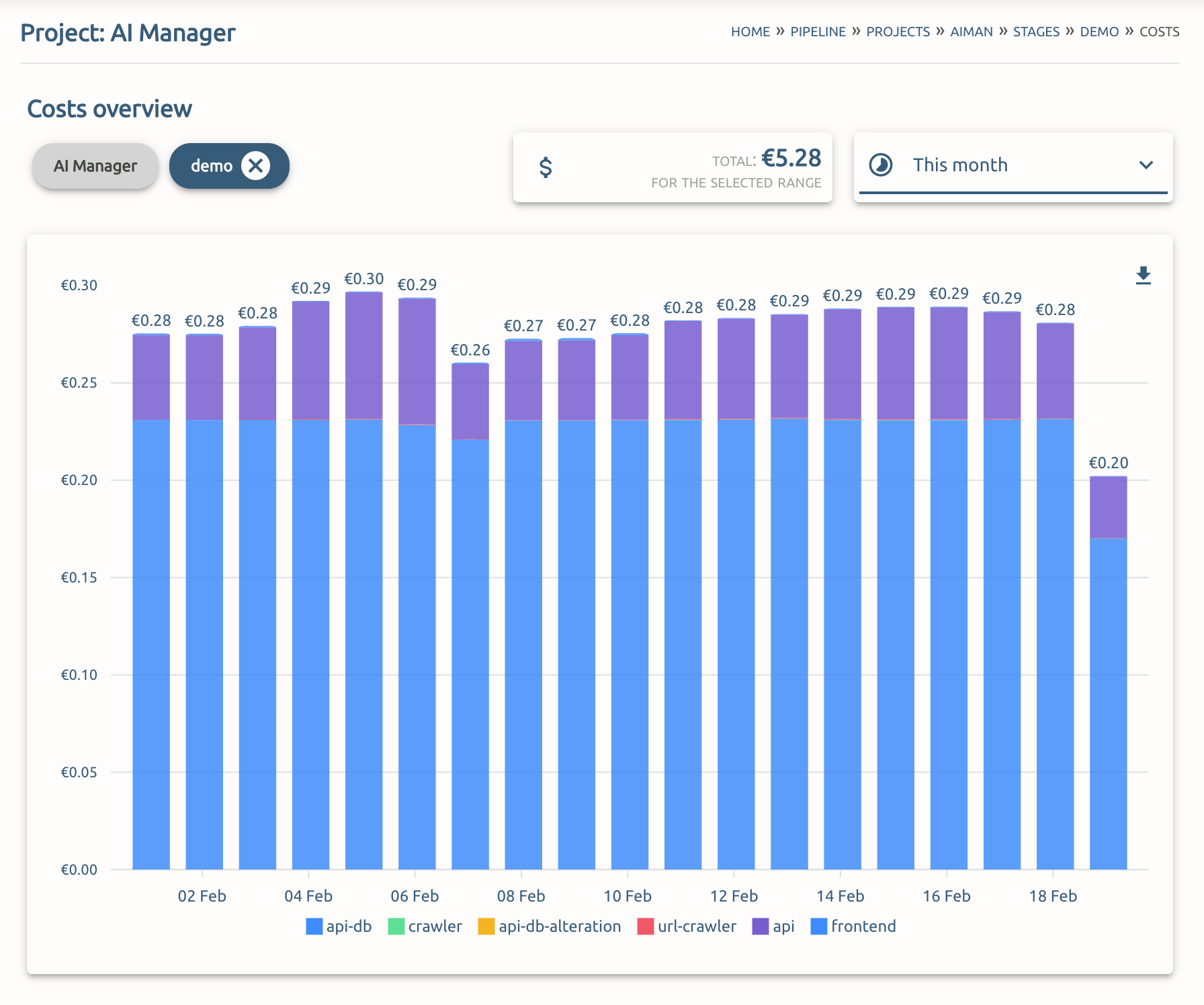
Real-time usage cost tracking across all your projects, with drill-down per stage, down to per component and the consumed resources (CPU, memory, …). See the cost control documentation for details.

Real-time cost tracking across projects, stages and components

Backups

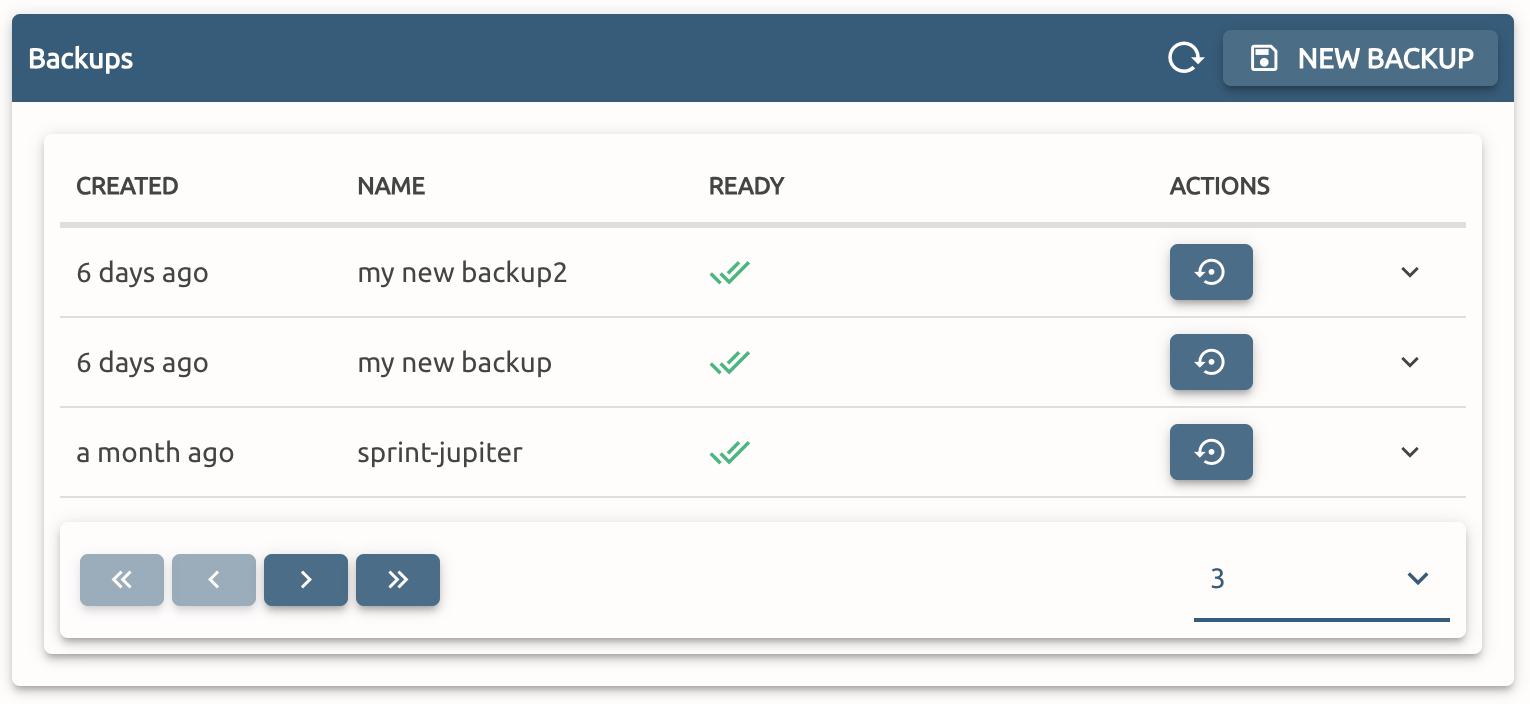
Back up all persistent data for a complete stage and restore it at any time. See the backups documentation for details.

Back up and restore all persistent data for a stage

Automated CI/CD

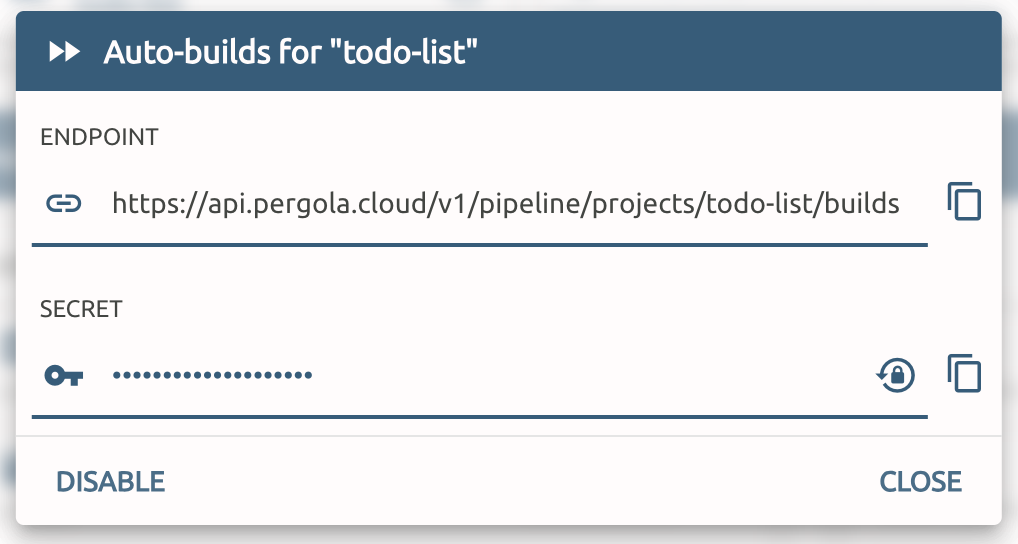
  • Auto-builds — trigger builds automatically when code changes are pushed to Git
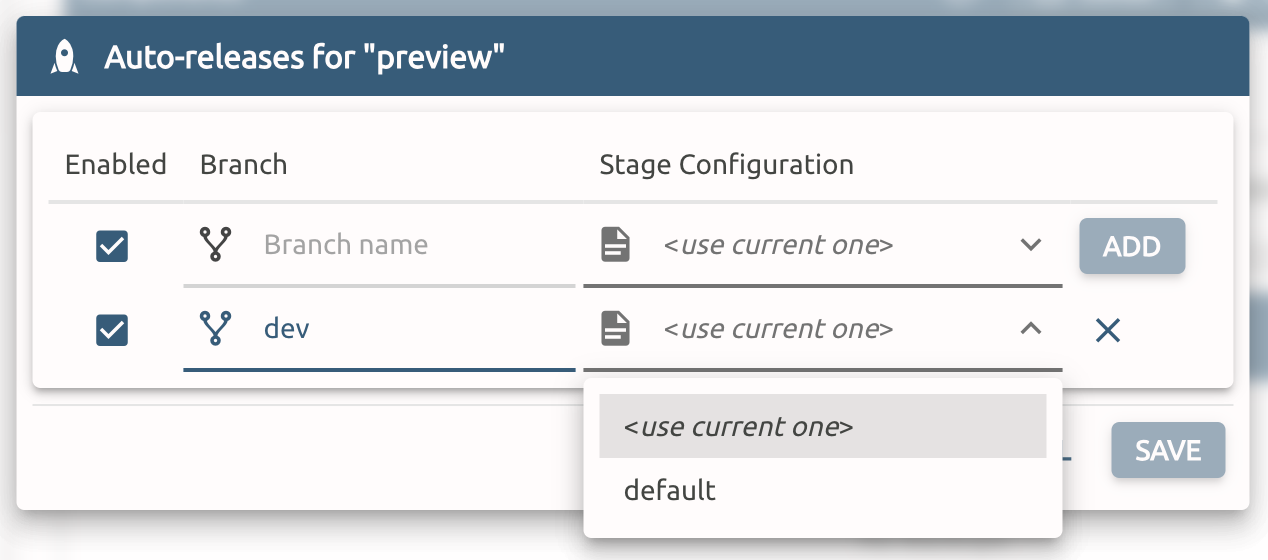
  • Auto-releases — automatically push a new release whenever there is a successful build, configurable per stage and Git branch

See our Automated CI/CD tutorial for details.

Trigger builds automatically on pushes to Git

Automatically push a release after a successful build

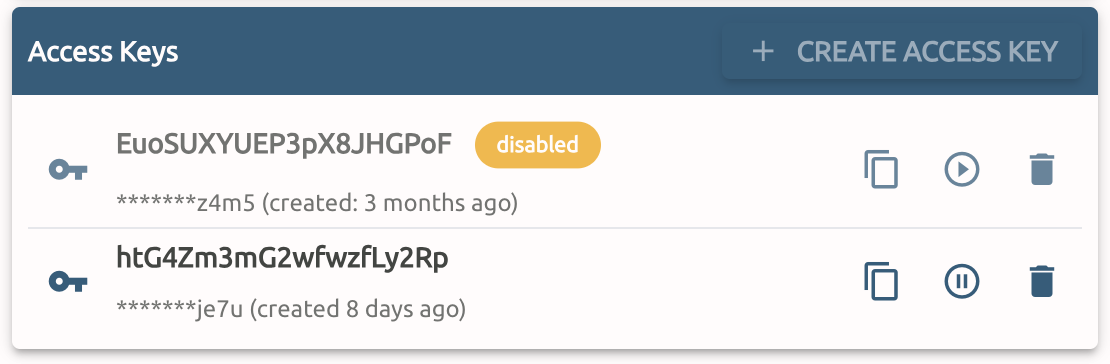
Access Keys

Manage access keys for use on the CLI in scenarios like scheduled (unattended) scripts or batch scripts triggered by external systems. See the access keys documentation for details.

Manage access keys for unattended automation

Manual Component Control

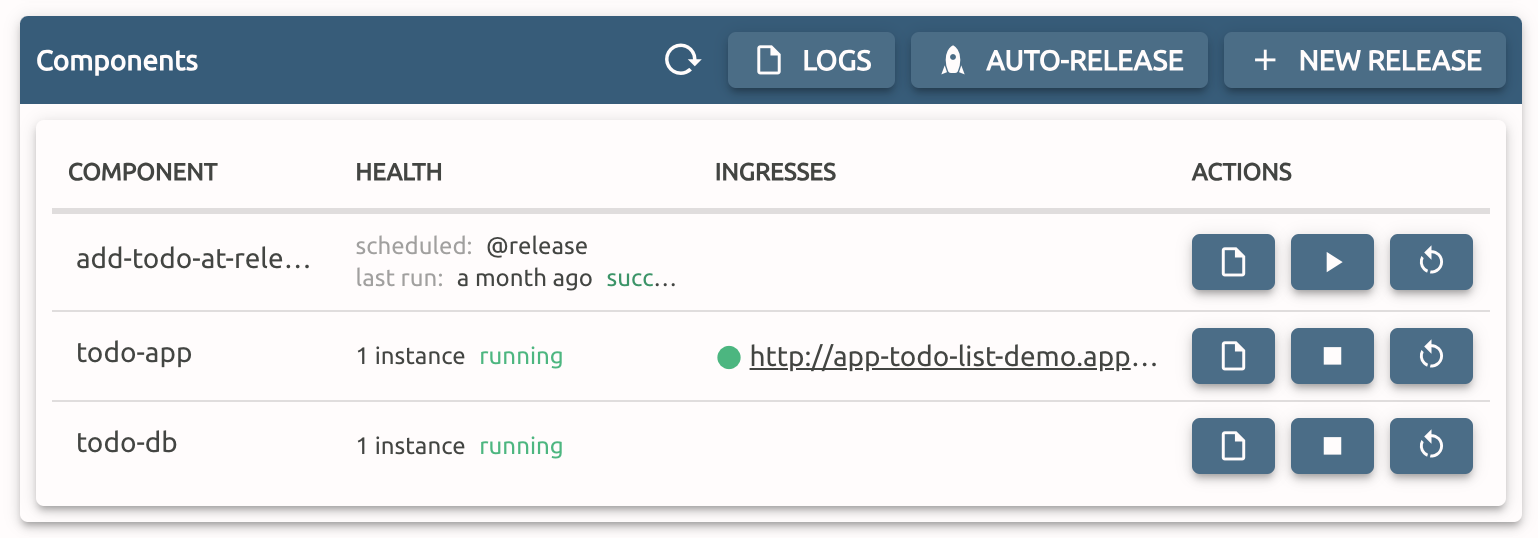
Manually start and stop components. See the components reference for details.

Start and stop components directly from the console

Build-Arg Metadata

You can now inject build-related metadata variables as build-args into your Docker build:

docker:
  file: Dockerfile
  build-args:
  - name: BUILD
    value: "$(BUILD_NAME)"
  - name: BUILT_WHEN
    value: "$(BUILD_TS)"
  - name: COMMIT
    value: "$(GIT_COMMIT_ID)"
  - name: BRANCH
    value: "$(GIT_BRANCH)"

See the project manifest reference for more details.

Improvements

  • Performance and stability improvements
v1.3.3 January 8, 2025

Bug Fixes

  • Fixed notifications with long text or line wrapping being truncated
v1.3.2 January 6, 2025

New Features

Two new backend flags (both disabled by default) give platform admins stronger runtime hardening:

  • Enforce unprivileged (non-root) user in all components — when enabled, new releases are accepted only if every component in the project manifest defines an unprivileged user, otherwise they are rejected
  • Read-only filesystem in all components — when enabled, components run on a read-only filesystem, preventing changes within a container at runtime (applies to new releases only; components needing write access must define a temporary storage)

Improvements

  • Improved Outpost status display

Security

  • Upgraded dependencies and applied security patches

Bug Fixes

  • Keep old vulnerability results if a recent scan fails (e.g. due to temporary network issues)

Kubernetes Support

  • AKS v1.31+ supported
v1.3.1 November 21, 2024

Improvements

  • Minor fixes and improvements

Security

  • Upgraded dependencies and applied security patches

Bug Fixes

  • Fixed an issue with automatic vulnerability scans

Kubernetes Support

  • AKS v1.30+ supported
  • EKS and GKE v1.31+ supported
v1.3.0 May 21, 2024

Vulnerability Scans, Multi-Platform Builds & Metrics

A security- and observability-focused release, with first-class vulnerability scanning surfaced right where you work.

New Features

Automated Vulnerability Scans

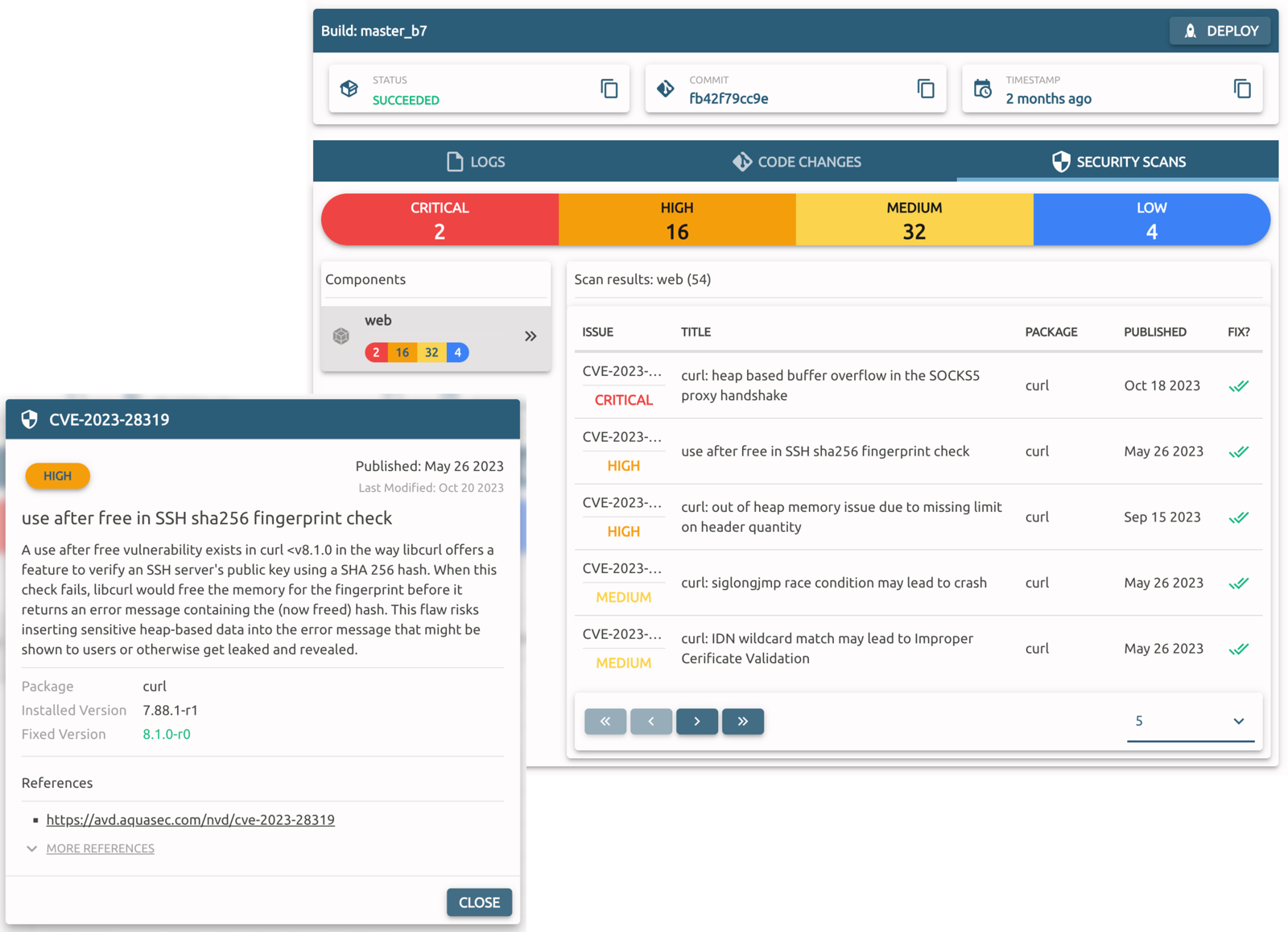
Every build is automatically scanned, adding a layer of quality control before deploying a new release:

  • Issues are reported alongside their details, available fixes and mitigation options
  • Regular re-scans of currently deployed (active) builds keep results up to date for running applications

Vulnerability scan results per build, with details and recommendations

Unprivileged Components

Most container images run as root (UID 0), which is a security concern. You can now explicitly run a component as a non-root user, if supported by your image:

components:
- name: web
  docker:
    file: Dockerfile
  user: 1001

When a user is specified, Pergola applies additional security policies to further protect your application’s runtime environment.

Multi-Platform Builds

Build and run your components on ARM64, AMD64 (default), or both, if your image and its packages support it:

components:
- name: website
  docker:
    file: Dockerfile
    platform:
    - arch: amd64
    - arch: arm64

Pergola ensures your component builds and runs based on the architecture actually available in your cluster. Builds are rejected if your manifest requires an architecture the cluster does not provide.

Code Changes per Build

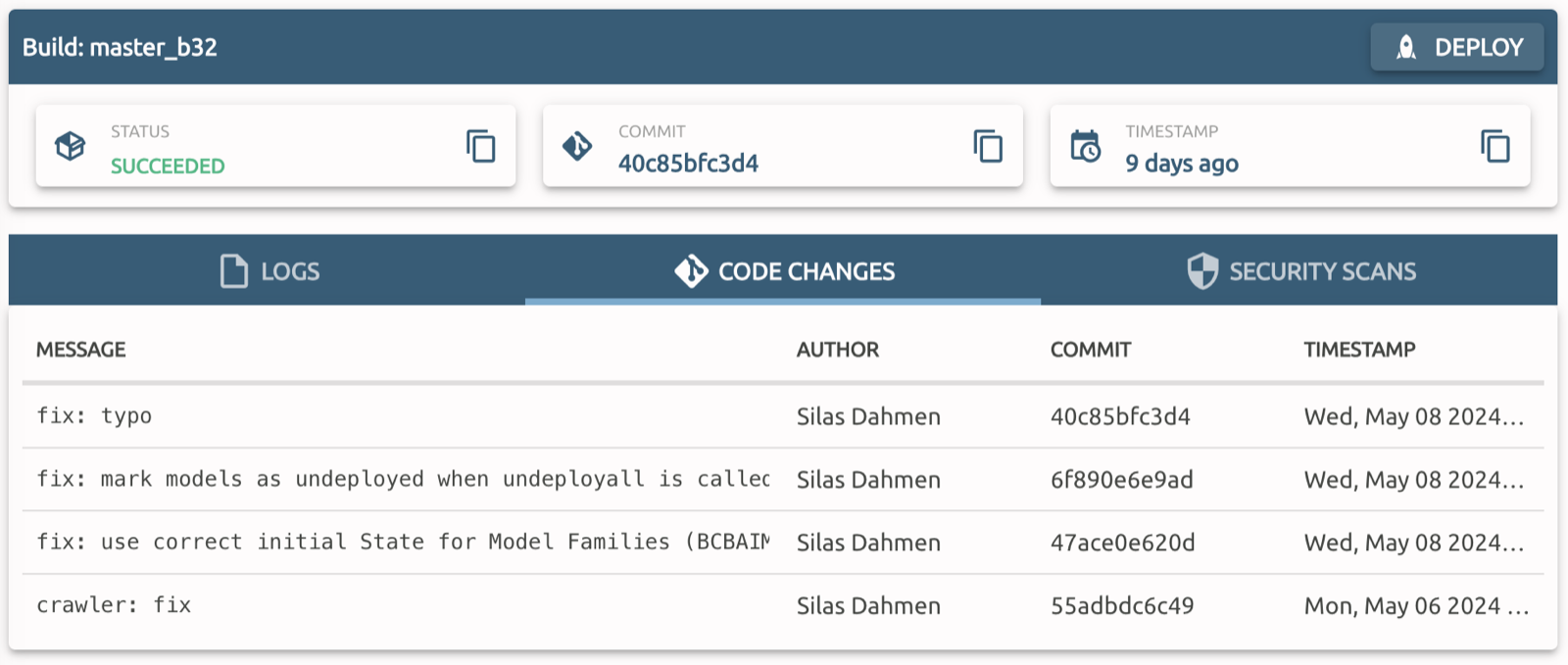
A build is usually triggered after a few code changes — you can now see exactly what changed compared to the previous build on the same branch.

Code changes since the previous build on the same branch

Component Failure Details

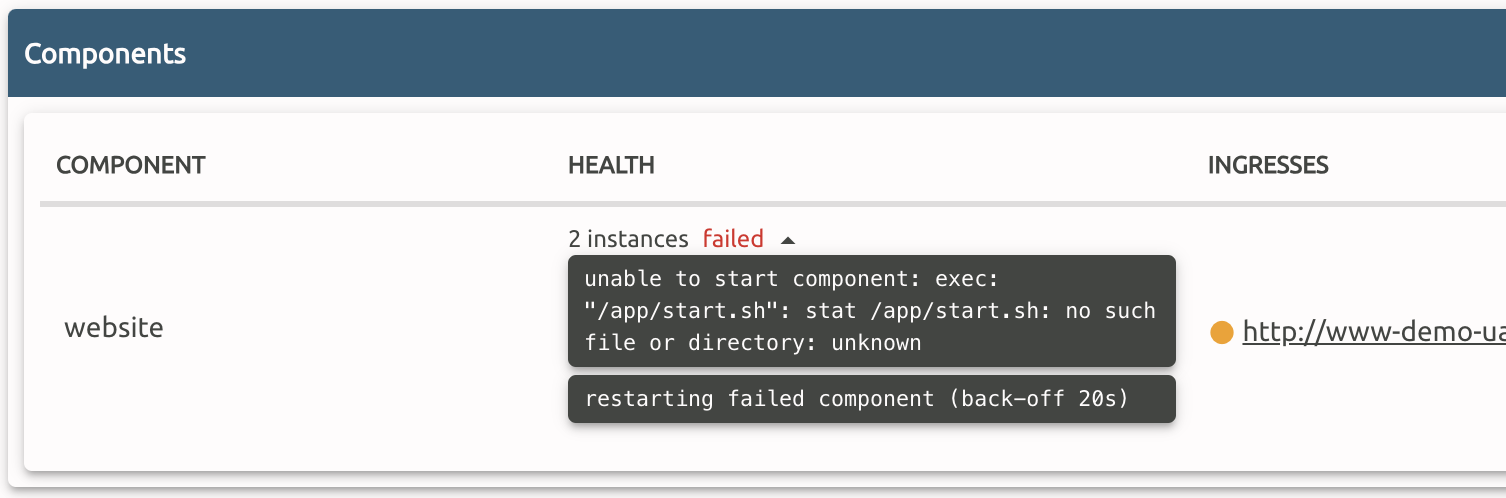
When a component fails, logs were previously the only source of information. You now get additional context on the potential root cause — particularly helpful when a component could not start at all and no application logs are available.

Additional context on why a component failed

Improvements

  • Custom links to external documents or services, fully configurable per customer

    Custom links to external documents or services

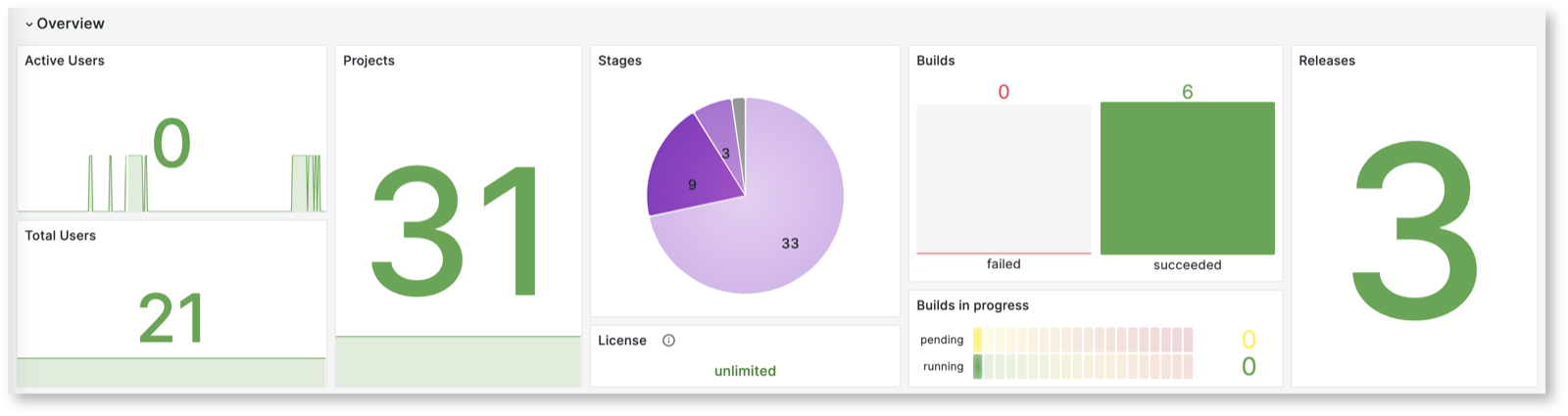
  • Prometheus metrics for Pergola admins, visualisable in tools like Grafana (a starter set of metrics, with more to come)

    Prometheus metrics, ready to visualise in tools like Grafana

  • Configurable log retention: build logs and project-level logs are retained for a configurable period and then automatically deleted.

    • Defaults:
      • build logs 30 days,
      • DEV stage 30 days,
      • QA stage 90 days,
      • PROD stage 365 days.
    • This does not affect external log aggregation services (e.g. ELK) with their own retention.
  • Deploying to a suspended stage is now supported (experimental) — use with caution, as behaviour may change in future versions

  • And more UX improvements and fixes

Kubernetes Support

  • AKS, EKS and GKE v1.29+ supported
v1.2.2 February 23, 2024

Bug Fixes

  • Restored ingress protection that prevents overrides when an ingress was manually configured by an admin (e.g. for enforced MFA)
v1.2.1 December 22, 2023

Improvements

  • More resilient status tracking for Outposts that send updates irregularly and/or are offline for long periods
  • Layout fixes and minor rendering improvements

Kubernetes Support

  • AKS, EKS and GKE v1.27+ supported
v1.2.0 September 19, 2023

Outposts, Notifications & Archiving

A big release that extends Pergola beyond the cluster, keeps you informed, and makes deletions reversible.

New Features

Outposts

Deploy to remote environments, edge devices and IoT infrastructure:

  • Seamlessly integrated with stages, providing the familiar release and configuration management
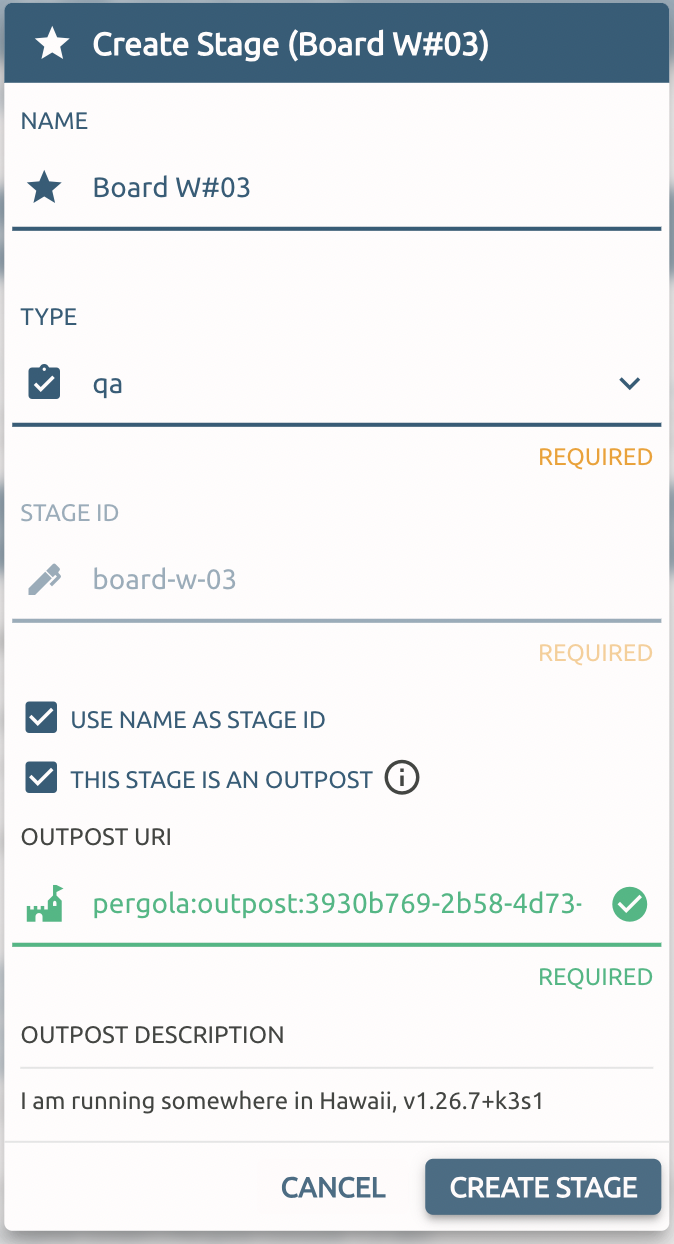
  • Create a stage linked to an Outpost running in a far, far away cluster — managed like any other stage, just wearing a special badge

Create a stage linked to an Outpost

Notifications

A central hub that collects and pushes notifications about your project’s background processes while you were away or waiting:

  • The first iteration covers builds that could not start at all (and therefore can’t provide useful runtime logs)
  • Future releases will add notifications for deployment and runtime issues, optimisation hints, recommendations, and more

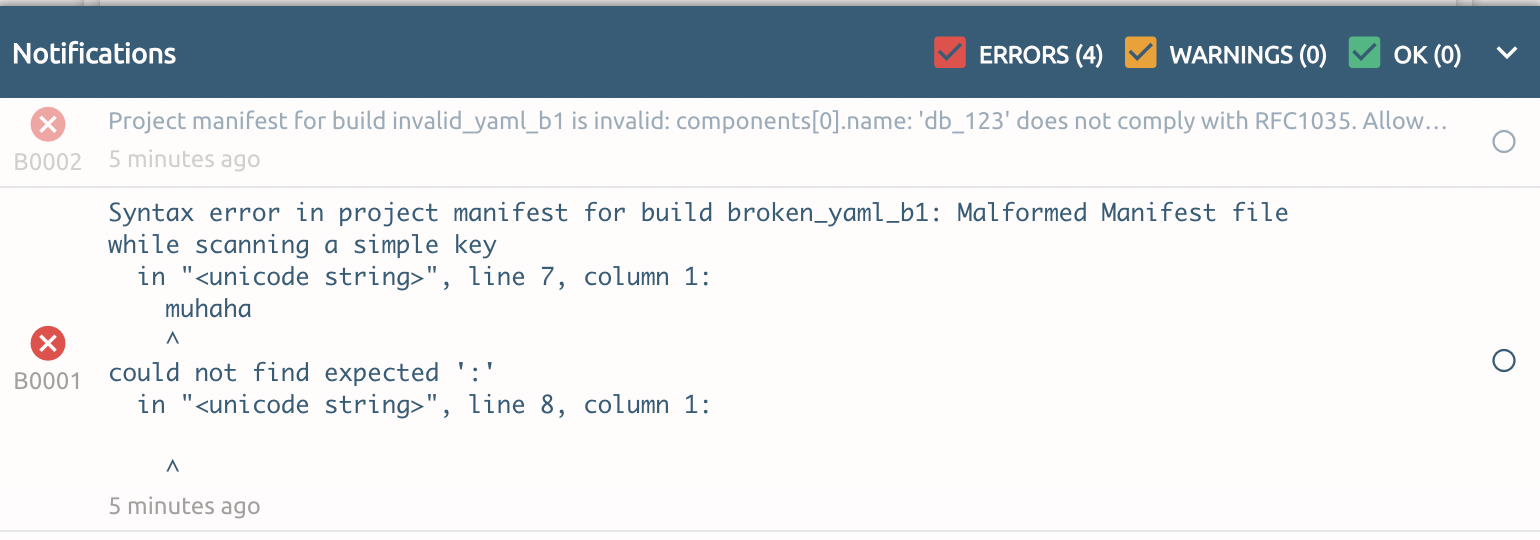
The project notifications hub

The project notifications hub

Archiving Projects & Stages

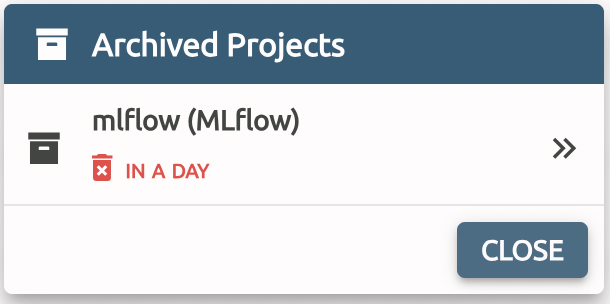
  • Deleted projects and stages are archived first for a configurable period before they are ultimately deleted

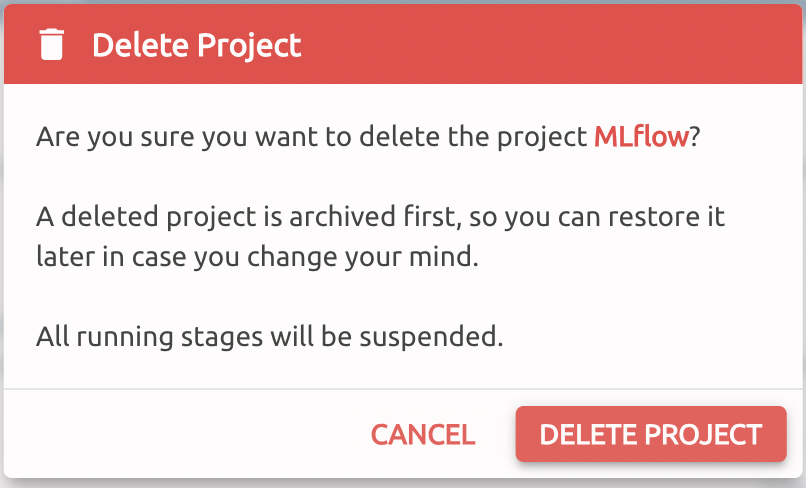
    Deleting archives the project or stage first

    Delete projects and stages you no longer need

  • While archived, a project or stage can be restored at any time without losing data or configuration

    Restore an archived project or stage until permanent deletion is due

Configuration Management

  • Delete unused configurations

    Delete unused configurations

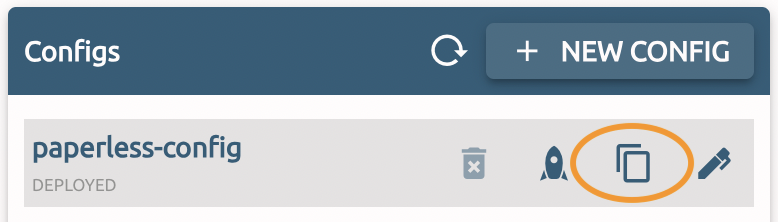
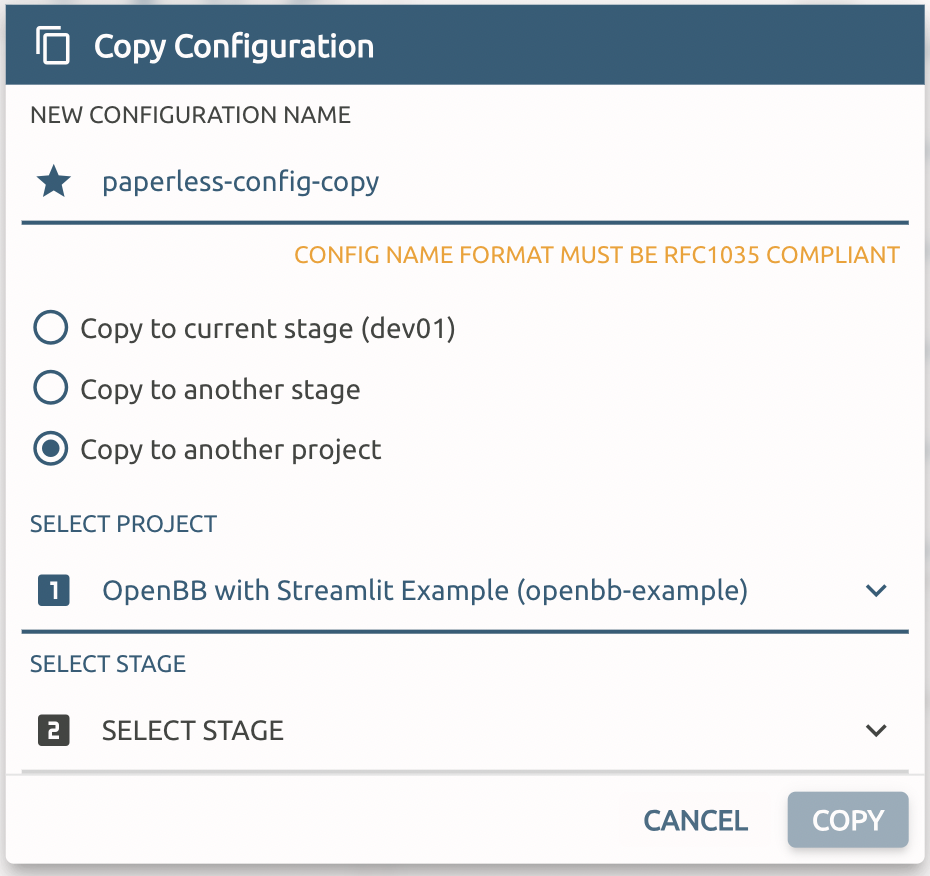
  • Copy existing configurations to other stages and projects

    Copy an existing configuration to other stages and projects

    …then select your target

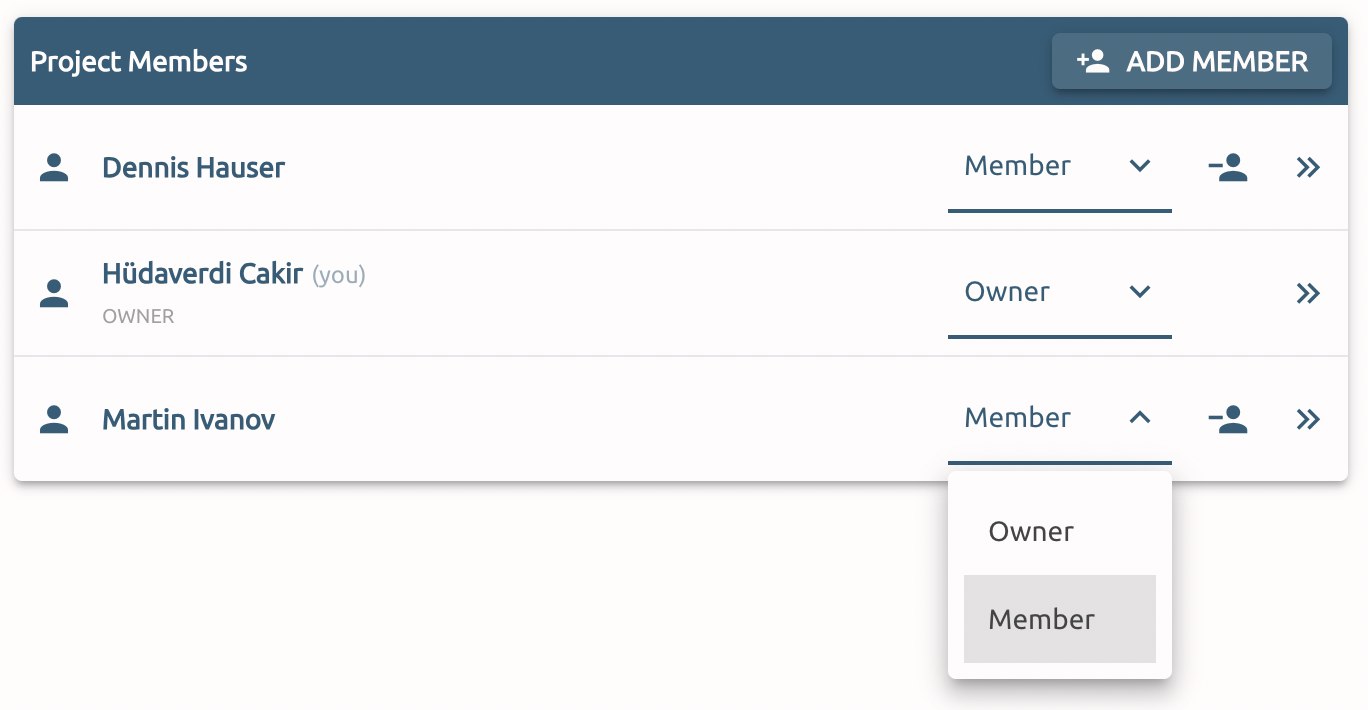
  • Manage project ownership — easily assign or revoke ownership to other members

    Assign or revoke project ownership to other members

Improvements

  • New storage types for ephemeral data
  • Configurable maximum number of retries for scheduled jobs
  • Middleware upgrades, backend optimisations and performance improvements

Bug Fixes

  • Fixed log handling duplicating timestamps, which made each log entry unnecessarily long

Kubernetes Support

  • AKS, EKS and GKE v1.26+ supported
v1.1.8 May 19, 2023

Bug Fixes

  • Fixed the API occasionally stalling when too many status calls were issued in parallel for stages with hundreds of components

Kubernetes Support

  • AKS, EKS and GKE v1.25 supported
v1.1.7 April 19, 2023

Improvements

  • Optimised resource and API call handling to cloud resources, also minimising the risk of rate limits and timeouts

Kubernetes Support

  • AKS, EKS and GKE v1.24 supported
v1.1.6 February 2, 2023

Improvements

Dedicated Nodes — Configurable assignment of workloads to a specific set of nodes:

  • Separate releases from builds, production from development, or even dedicate a node pool to a specific project
  • See the dedicated nodes documentation for details

Bug Fixes

  • Fixed out-of-memory issues and long-running build timeouts in large projects with multiple components

Kubernetes Support

  • AKS, EKS and GKE v1.23 supported
v1.1.5 July 6, 2022

Improvements

  • Client-side project manifest validation
  • Reduced component restarts during releases to an absolute minimum, lowering the risk of service interruptions
  • Build pipeline optimisations for more parallelism when building multiple components
  • API performance improvements

Bug Fixes

  • Predictable port mapping for stateful components (with storage) that define multiple ports

Kubernetes Support

  • EKS v1.22 supported
v1.1.4 April 11, 2022

New Features

  • Track live component status
  • Collect logs and expose them via API
  • Restart a component on demand

Improvements

  • Graceful shutdown and restart of components per stage (with suspend/resume support)
  • Optimised resource allocation during builds

Kubernetes Support

  • GKE v1.22 supported
v1.1.3 March 31, 2022

Security

  • Patched a security vulnerability in Spring (CVE-2010-1622)

Bug Fixes

  • Fixed colliding image digests in builds
  • Avoided concurrency in cron jobs
v1.1.2 March 17, 2022

New Features

Workload Identities — Link a component to a Cloud IAM at runtime, enabling IAM-backed access to cloud resources.

Improvements

  • Support for custom Dockerfile names and locations, including build context
  • API spec cleanup and refinements
  • Support for multiple messages in one response, including errors and warnings

Bug Fixes

  • Fixed stable sorting of stages
  • Prevented editing of data and identities while adding a new configuration
v1.1.1 March 2, 2022

Bug Fixes

  • Fixed failing authentication against Azure Container Registry (ACR)

Kubernetes Support

  • AKS v1.22 supported
v1.1.0 March 1, 2022

Faster Deploys & More Control

This release makes deploying faster and gives you more insight into what’s actually running.

New Features

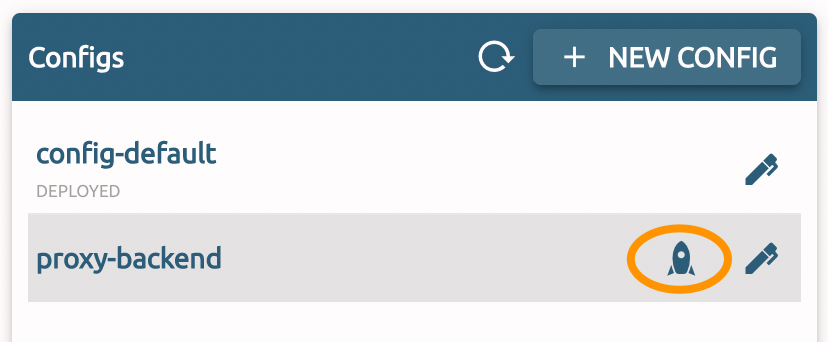
  • Deploy a new release directly from a build or from the configuration page

    Deploy a new release directly from a build

    …or from the configuration page

  • Display relevant stage status right on the project page

    Relevant stage status shown on the project page

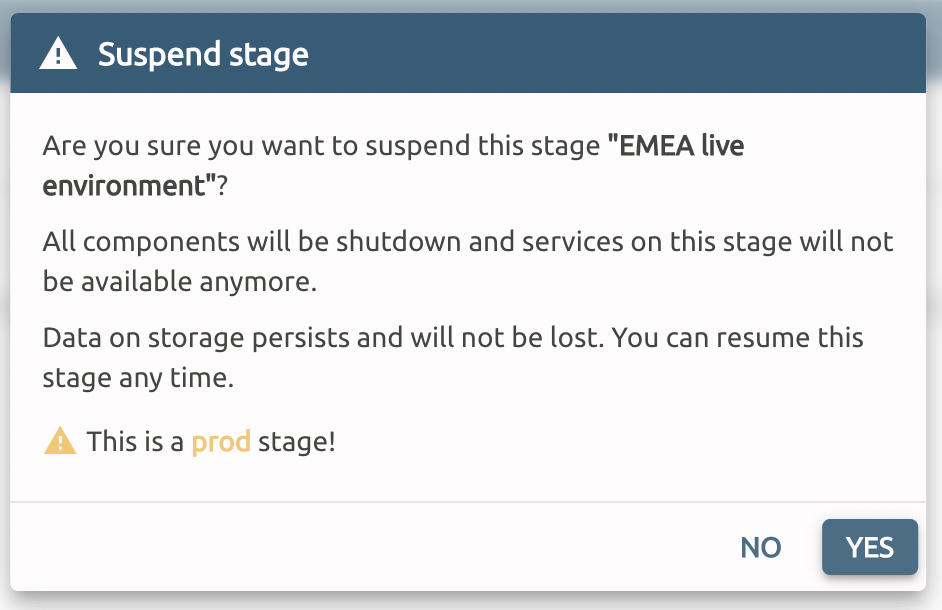
  • Suspending a stage now requires a user confirmation

    Suspending a stage now asks for confirmation

Improvements

  • Logs can now be filtered by release date, with improved navigation and optimised loading
  • Improved support for command and args on components
  • Several improvements and minor fixes

Kubernetes Support

  • GKE, EKS and AKS v1.21 supported
v1.0.8 February 10, 2022

Improvements

  • Configuration management now warns prominently when entries are not saved
  • Minor improvements and optimisations

Bug Fixes

  • Fixed a password prompt issue on Firefox
  • Fixed Git URLs without a .git suffix blocking the project setup dialog
v1.0.7 November 4, 2021

Minor fixes and improvements.

v1.0.6 August 3, 2021

Minor fixes and improvements.

v1.0.5 May 19, 2021

Minor fixes and improvements.

v1.0.4 February 10, 2021

Minor fixes and improvements.

v1.0.3 December 3, 2020

Minor fixes and improvements.

v1.0.2 October 14, 2020

Minor fixes and improvements.

v1.0.1 August 26, 2020

Minor fixes and improvements.

v1.0.0 July 12, 2020

First Release

Build, deploy and run your containerised applications in the cloud — without managing the cloud.

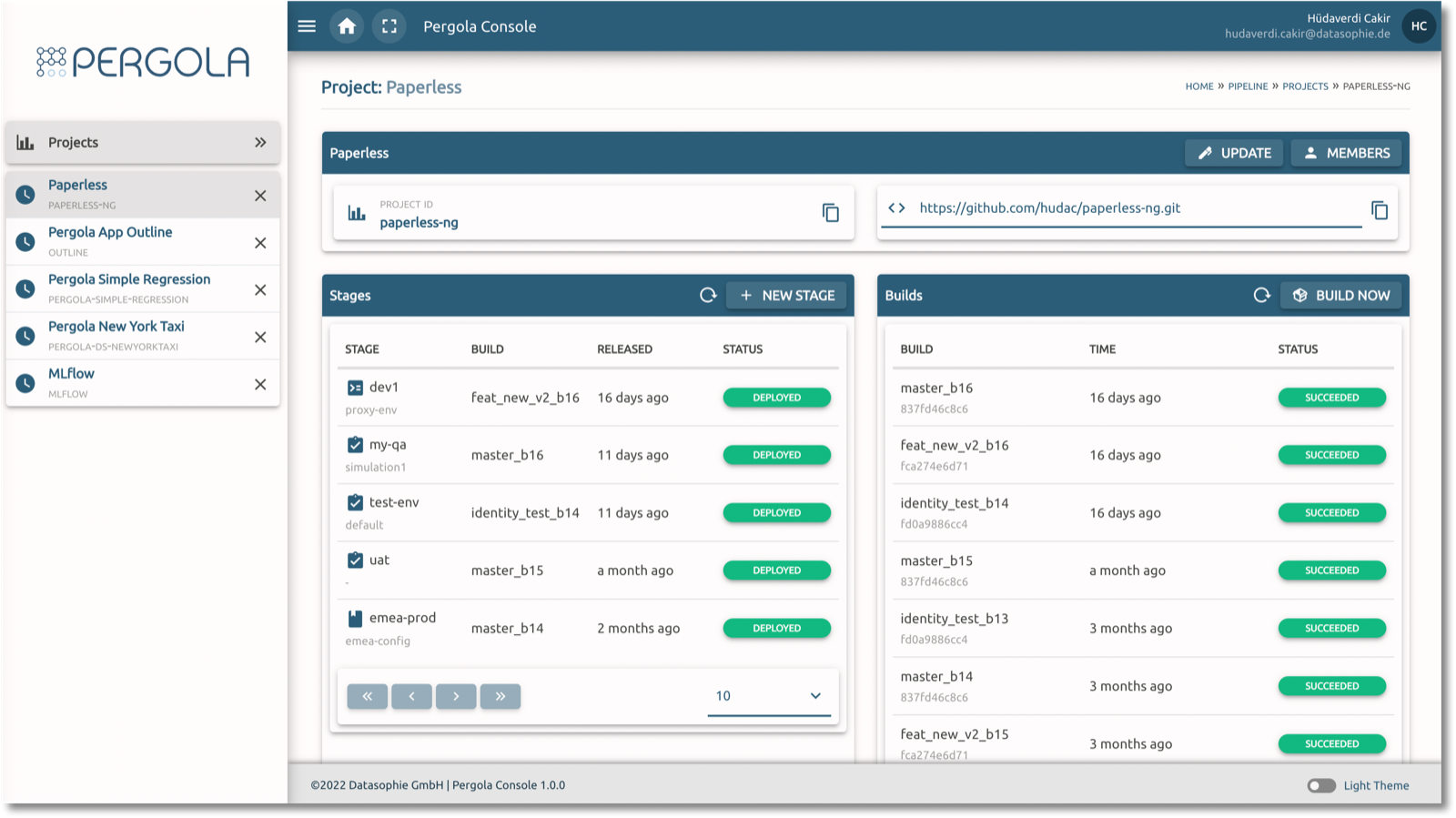
Manage stages and builds at a glance

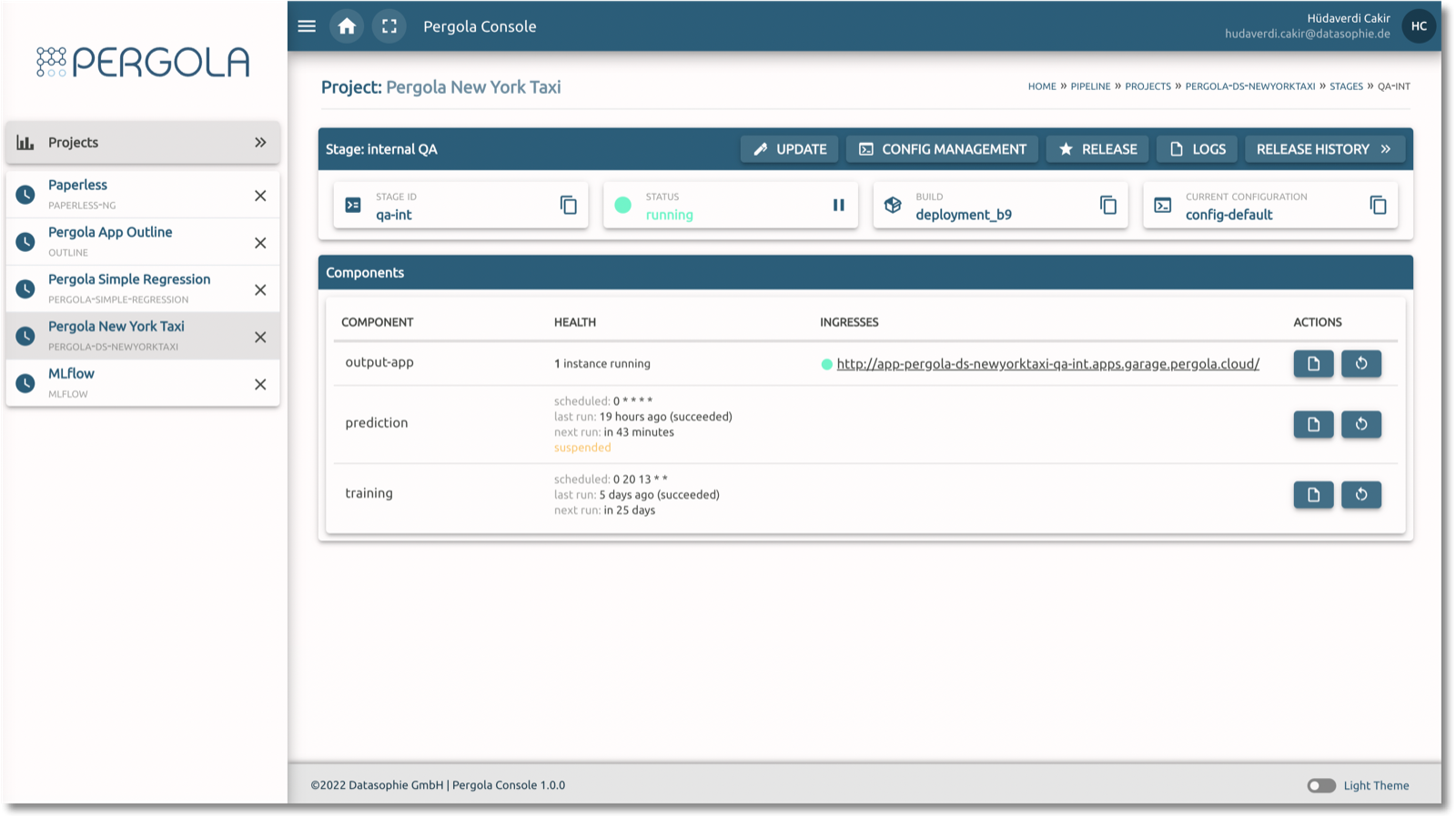
The Pergola Console — project overview with stages and components

Highlights

  • Deploy and share new releases of your application
  • Manage builds, configurations and stages (runtime environments)
  • Monitor and manage deployed components
  • Access build and runtime logs for troubleshooting
  • Collaborate with your team mates
  • SSO and MFA integration with major identity providers, like Azure AD, Google and GitHub